
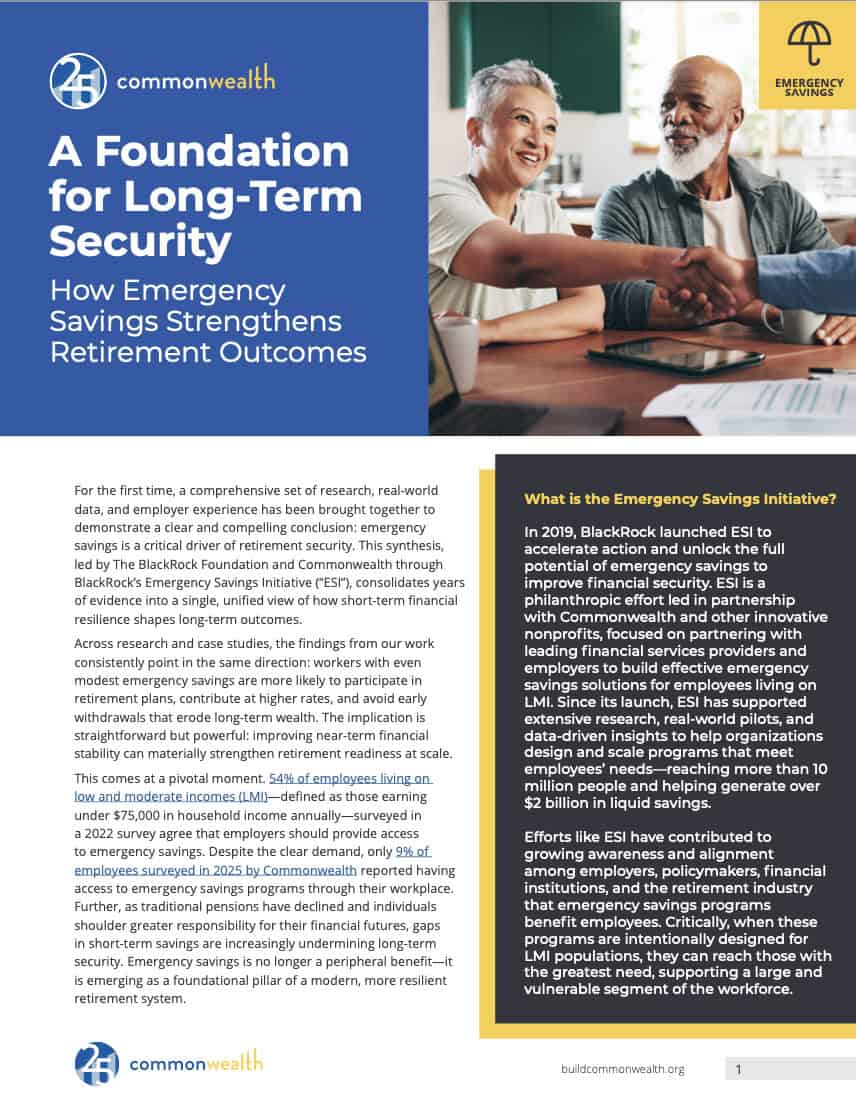
Drawing on evidence from Commonwealth’s work on BlackRock’s Emergency Savings Initiative, this synthesis highlights a clear and consistent pattern: workers with even modest emergency savings are more likely to participate in retirement plans, contribute at higher rates, and avoid early withdrawals that can erode long-term wealth.
Key findings
- Workers with emergency savings are more likely to participate in retirement plans
- Emergency savings is associated with higher retirement contribution rates
- Workers with emergency savings are less likely to take early withdrawals or loans from retirement accounts
- Even modest savings balances are linked to improved financial well-being
- Emergency savings supports both employee financial stability and employer outcomes, including productivity and retention
At a time when individuals are responsible for more of their financial futures, gaps in short-term savings continue to undermine retirement readiness. Strengthening emergency savings is one of the most effective ways to improve financial well-being, increase retirement participation, reduce leakage and support long-term wealth building, particularly for workers living on low and moderate incomes.
What this means
This brief provides a unified view of how emergency savings, financial security, and retirement security are connected and offers practical insights for employers, financial institutions, and policymakers looking to strengthen financial outcomes at scale.