
Introduction
Recent developments in the retail investing space, including the widespread adoption of commission-free trading and better UI on mobile and desktop platforms, have made it easier than ever to become an investor. Despite increased accessibility, significant gaps remain between a widespread desire to invest among households living on low and moderate incomes (LMI)—particularly Black, Latinx, and women-led households—and taking advantage of this key wealth-building opportunity.
To address these challenges, Commonwealth, with support from the Nasdaq Foundation, launched a groundbreaking research program and pilot with fintech partners, including Public, to gain insight into how the development of an investor identity can act as a key enabler for beginner investors to overcome initial feelings of doubt and develop a sense of belonging in the investing community.
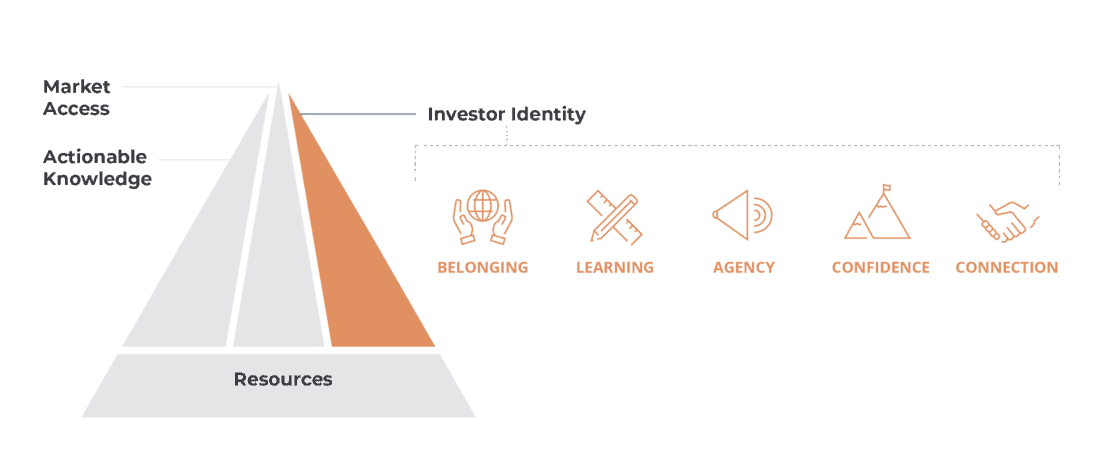
In this post, we explore some of the highlights from this critical research and the features on Public’s multi-asset investing platform that contribute to a more inclusive investing ecosystem. We will also look at some of the ways in which Commonwealth’s research provides insight into how these choices support beginner investors living on LMI. If you’d like to know more, check out Commonwealth’s full report on this research, as well as our toolkit designed to provide actionable guidance for providers looking to help make investing for everyone.
Investor Identity Insights
- Even incremental increases in investor identity are associated with positive action such as investing more funds and recommending investing to friends: Higher investor identity scores were associated with higher ratings of participants’ experience, higher rates of planning to add funds to their investing account, and higher likelihood of recommending investing to friends, indicating that even small increases in identity can have significant impact on investing behaviors. Platforms that are able to cultivate identity effectively for new customers can see direct benefits through increases in deposits and net promoter scores.
- Investor identity “clicks” after 6 months: Overall, average investor identity scores for participants grew during the first year. Most of this increase happened during the second six months of participation, highlighting a dynamic in which early experiences eventually start to “click” and translate into changing perceptions of oneself as an investor over the course of the first year. For providers, this means that the initial phase of laying the foundation for beginner investors should be understood to extend beyond onboarding, with the first six months a critical incubation period when the elements that give rise to investor identity are cultivated.
- Perceptions of investing change during the first year for most participants: 71% of participants agreed that investing was easier than they had initially thought. The amount of money people thought was needed to be considered an investor declined during the pilot period, indicating a more inclusive understanding of who investors are. For many beginner investors, the biggest hurdle is getting started so that they can see that it is not as difficult as they imagined. Tools like seed funding or other promotions are critical for getting them in the door so that they can develop a more informed understanding of what investing entails.
- Emergency savings matters more than income for retaining beginner investors: Participants who started with less than $500 in emergency savings were 50% more likely to have to withdraw their funds before the program ended than participants who had more than $500 saved. The most common reason cited for withdrawal was financial need. This difference highlights the important role resources play in individual agency as an investor, and the opportunity that exists for integrating low-risk savings products into the investing experience.
- Representation matters: Participants who did not feel represented in investing messaging and advertising reported a lower sense of belonging in the investing community; 73% of participants who felt represented reported that they felt a sense of belonging, compared to just 44% of participants who did not feel represented. Women were half as likely as men to feel represented in investing messaging and advertising. We also found that representation was perceived along a variety of axes, including race, gender, age, and income. These communications are many investors’ first impression of platforms, and can play a large role in the decision to get started.
Active learning is an important part of investor identity development
One key finding from this research has been that context and understanding the markets is a contributor to a sense of belonging and was the most commonly cited drivers of feelings of belonging in the investing community by participants. Conversely, a lack of understanding of how to make investing decisions was the second most commonly cited reason for not feeling a sense of belonging. Participants who used educational tools were 21% more likely to report feeling a sense of belonging.
Public Features Used at Endline
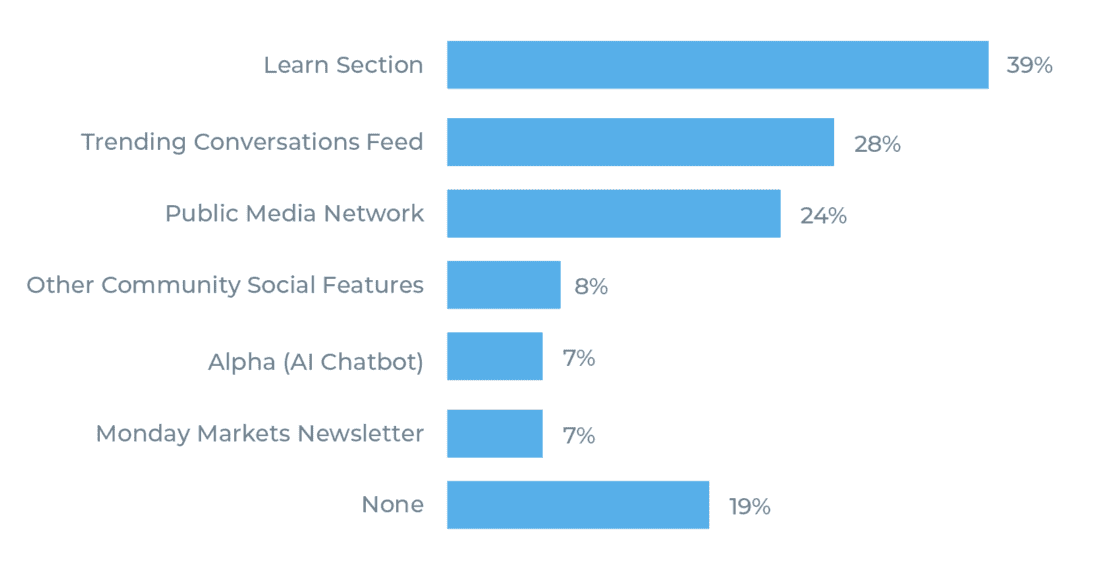
Public embeds robust market data and tools to improve understanding of market events. The variety of options available and accessibility of these options resulted in 81% of our research participants using one or more educational features on Public, with Public’s dedicated Learn section being the most popular.
Last year, Public also rolled out its generative AI investing companion, Alpha, which can provide members context for their investing questions. This next generation of support technology may play a role in building beginner investors’ identities by providing them with personalized learning materials and a space to ask questions without judgment. Commonwealth’s Financial AI for Good: Guide & Chatbot provides additional insights on the exciting opportunities for AI in finance.
Becoming comfortable with informed risk is an important part of developing agency and identity as an investor
Another significant finding from this research is that developing a greater comfort with risk emerged as a consistent indicator of the development of investor identity and of more positive evaluations of the investing experience. While participating in this research, 50% of participants reported that they had become “more comfortable with risk” in an investing context. We found that this group also developed significantly higher investor identity scores by the end of the program and rated their overall investing experience an average of two points higher on a 10-point scale compared with participants who did not become more comfortable with risk.
Transitioning from a generalized perception of risk to a more specific understanding of how risk differs across different products, and of people’s own risk tolerance, is a crucial step toward developing an investor identity. Becoming comfortable with informed risk is particularly important for beginner investors living on LMI because the fear of losing everything as they enter a new and unfamiliar financial environment can be a major barrier.
The wide range of investing options provided by Public—including stocks, bonds, options, 5.1% high-yield cash accounts, royalties, and automated investment plans—together with clear information about their relative risk levels is an example of how risk can be introduced as a controlled choice rather than as an overwhelming and unknown factor, facilitating the development of a sense of agency and identity for beginner investors who are figuring out where investing fits into their lives.
Conclusion
Public has been a champion for inclusive investing through partnering with Commonwealth on this critical project and making strides to welcome beginner investors, including those living on LMI, to take advantage of the wealth-building opportunities afforded by digital retail investing. For a complete analysis of this research, check out our comprehensive final report from this Transforming Investor Identity project. This project is also accompanied by an action-oriented toolkit with practical guidance for providers looking to implement more inclusive design and cultivate investor identity.
This is not intended to be personal financial advice or a product endorsement and is shared for informational and educational purposes only.
If you would like to be involved in this research and in the broader project of building a more inclusive investing system, please reach out to us at info@buildcommonwealth.org.