
Commonwealth recently completed the first phase of our research, The Financial Benefits Project: Developing a Financial Security Toolbox for the Evolving Workforce, to test what financial benefits employers can use to best support the financial security of gig workers. The research will provide insights into the financial needs of gig workers and recommendations for employer benefits that reduce the impact of income volatility. This first phase was completed in partnership with Green Dot and the payroll platform Gig Wage.
The Changing Nature of Work
Gig workers account for between approximately 25 to 35% of the national workforce. When considering low- to moderate-income (LMI) workers, these percentages are likely higher. Our previous research has found that gig workers choose these positions for:
- flexibility allowing them to match their work with their family’s needs;
- supplemental income as needed/desired; and
- independence to meet their career and financial aspirations.
However, these positions generally provide wages that are low and unpredictable, increasing volatility—a barrier to financial security.
Research Design
The first phase of the project ran for four months and tested three benefits designed to mitigate the impact of income volatility and increase financial security.
- Recurring Stipends: Weekly stipend of $80, directly increasing take-home pay
- Emergency Grants: Access to an emergency grant program with grants up to $1,000 over the course of the pilot, similar to the support provided to gig workers in the Worker’s Strength Fund project
- Low-interest Loans: Access to high quality, low-interest credit building loans (Unlike the other two interventions, this support will be paid back by workers.)
The benefits were offered to approximately 60 gig workers; 43 participants continued throughout the pilot. The low- to moderate-income (LMI) gig workers that The Financial Benefits Project focuses on are disproportionately Black and Latinx.
Below, we present early findings on the impact of the project as well as design recommendations for researchers and practitioners interested in testing similar programs.
Initial Findings
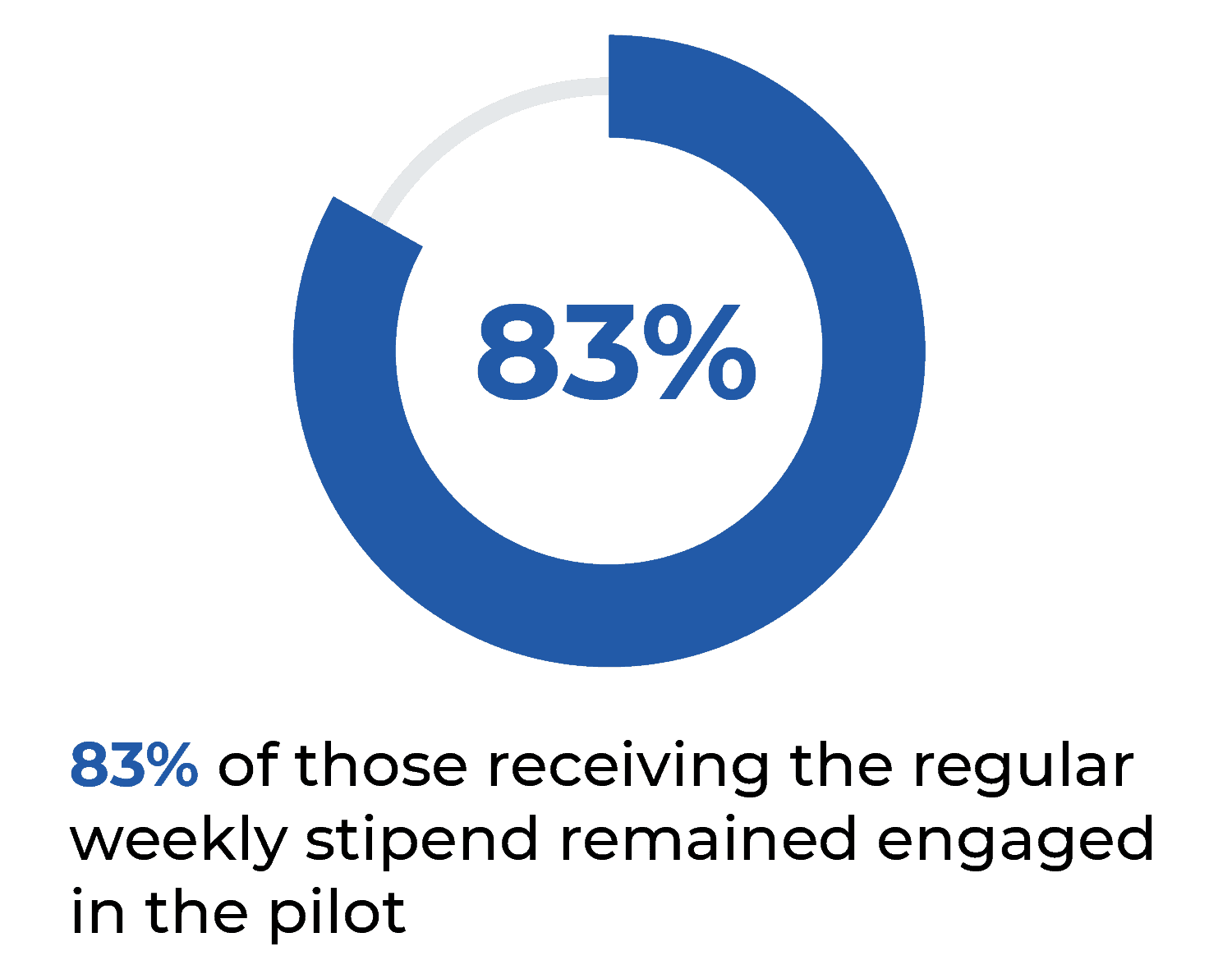
- 83% of those receiving the regular weekly stipend remained engaged in the pilot
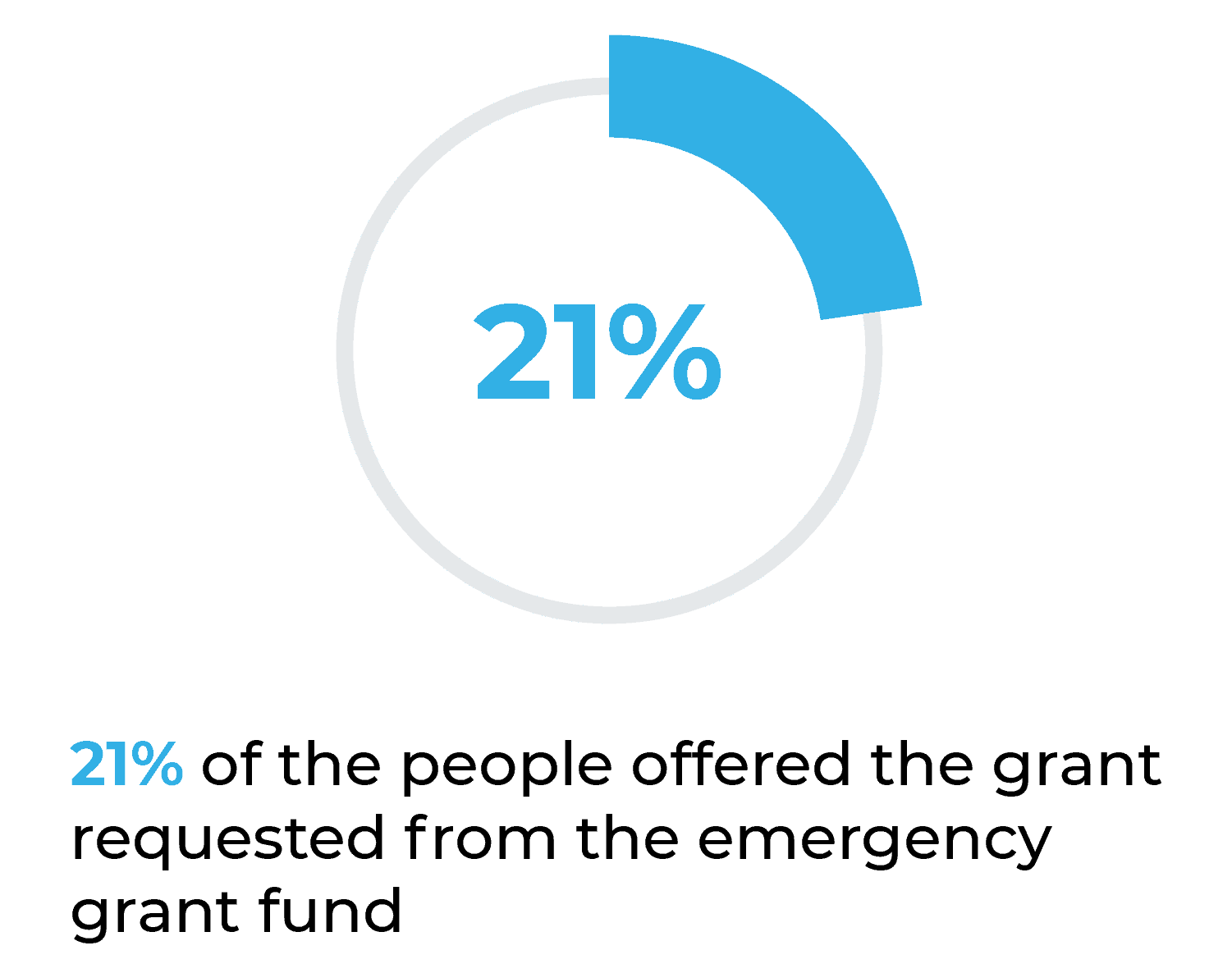
- 21% of the people offered the grant requested from the emergency grant fund
- 32% of the people offered the loan accessed a low-interest loan
Use of Funds
Of those who accessed the grant and loan offerings, 72% requested the full $1,000 in the initial request. Funds were primarily used to cover rent and utilities, auto-related expenses, and medical expenses. Participants who experienced a financial hardship, but did not access the financial benefits, cite the same three as the top expenses.
Those participants managed their hardship by working overtime or taking on additional gig work, borrowing from family, using personal savings, or using credit cards.
Income and Expense Volatility
Although designed to help gig workers manage income volatility, $1,000 was often insufficient to address the degree of volatility this group experienced. All of the participants were gig workers for an on-demand healthcare marketplace in Texas and shift availability often varied from week to week. At the close of the pilot, a majority of participants experienced some form of volatility in their income (67%) and expenses (65%) with one third often experiencing variation from week to week. Schedule stability remains fundamental to financial security because it leads to income stability.
Communication Channels
In addition to testing the effects of the financial interventions, Commonwealth evaluated data collection methods for research with LMI households. Throughout the pilot, biweekly surveys were administered by either Interactive Voice Response phone calls or via text-based messaging (WhatsApp and Facebook Messenger).
Participants were most likely to complete research activities if they had interacted with a researcher in real time. Having someone available to answer questions helped to build trust in the program and sustain engagement in the research. Additionally, participants preferred to complete the surveys delivered over email or using Interactive Voice Response. Further, response rates were higher when participants had greater flexibility in when they completed the biweekly surveys (i.e., using language such as “Complete the survey between Monday and Wednesday every other week” instead of “Complete the survey every other Monday”).
Design Recommendations for Research
In March 2022, Commonwealth launched a second cohort with Steady, a platform that connects users to part-time, hourly, and on-demand work opportunities, to follow an additional 80 gig workers. For the second cohort, Commonwealth implemented three design changes based on learnings from the first research phase.
- Generate Engagement
These financial benefits run the risk of being “too good to be true” when offered by a third party unrelated to an employer. Additionally, beyond the moment of request and fund distribution, participants have little engagement with the program. Having the research team administer the first survey should build trust and commitment toward repeat research activities. - Simplify Communication
The benefits, particularly the pre-approved loan, can be difficult to understand. For a person experiencing a financial hardship, complicated or numerous steps may prevent use of the offering. We redesigned our offerings and communications to further simplify the program. - Right Messenger
Who offers the benefits impacts the degree users are willing to engage with them. Knowing what platforms a user expects to see a loan, a grant, or an increase in pay from can help increase trust and engagement with your target audience. Our partner for our next test has a history of delivering cash grants to users, and we will evaluate how this impacts trust and take up of the offers.
Next Steps
The second phase, in partnership with Steady, will run through July 2022. A final report will include findings about the impact of each type of benefit on gig workers’ financial security and areas for additional testing to see what package of financial benefits should be offered to workers to best support their financial security.


We are actively engaging with innovators, fintechs, financial services firms, industry experts, employers, and policymakers. To learn more about how your organization can partner with us to discover new data, receive expert insights, and strategize to improve the financial security and opportunity, contact us or sign up for our newsletter. We look forward to working together towards a more equitable financial future for people living on low- to-moderate incomes.